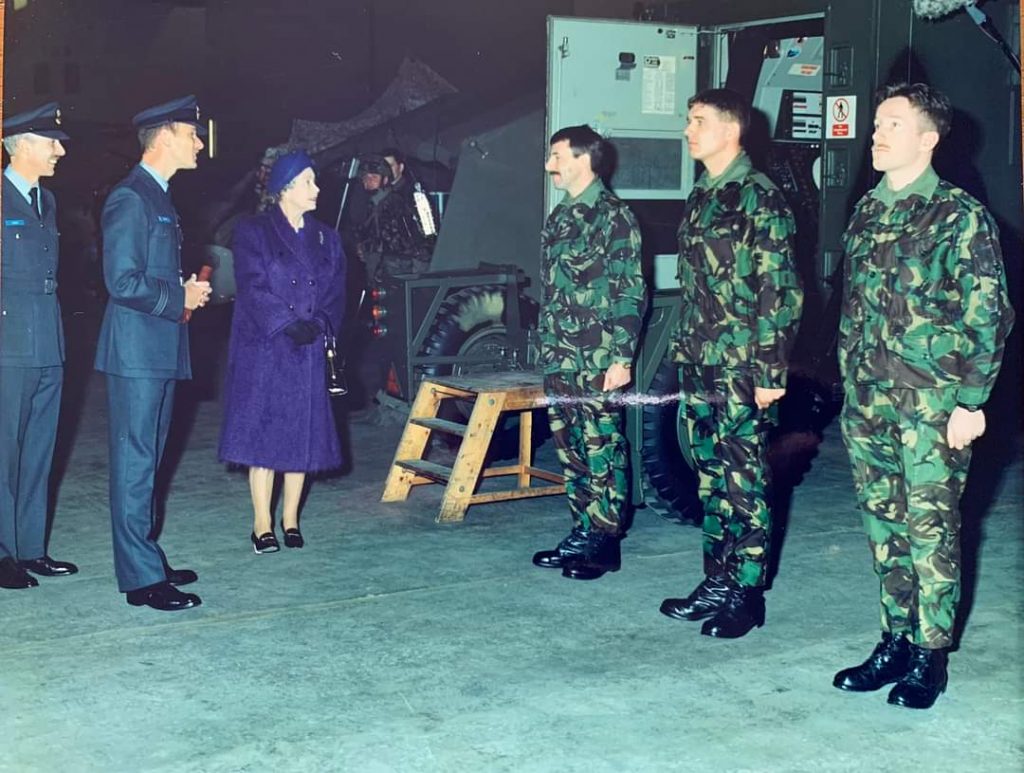
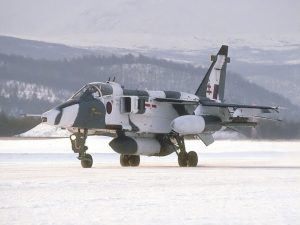
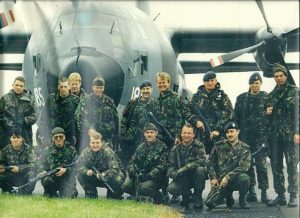
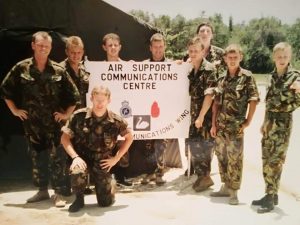
Prior to 1990, TCW employed volunteer airmen of all ranks and trades from across the ground branches within the Royal Air Force. However, due to the ongoing requirement to provide information services and communications to OOA detachments such as Op JURAL in the Middle East and fulfil its commitment to both the RAF and PJHQ, demand on the Unit and personnel increased significantly. This required a change in the manning policy within the RAF and in the mid 90’s, TCW thus became a standard posting for all personnel within the ground trade groups. Another significant change in manning came in Nov 1995, when women were able to apply and join the Unit for the first time.
Although predominantly Communications and Telecommunications specialists from trade group 3 and 11 (now amalgamated within TG4), personnel were sourced from other trades such as Aerial Erector, Ground Support Equipment, Motor Transport, Air Traffic Assistant, Air Traffic Controllers, Administrative, Supply and Regiment trades. In addition, TCW also had its own Standards & Training Flight (STF), manned by attached RAF Regiment personnel and Specialist Trade Staff that had received additional training, such as weapon handling, map reading and NBC training at Winter Bourne Gunner.
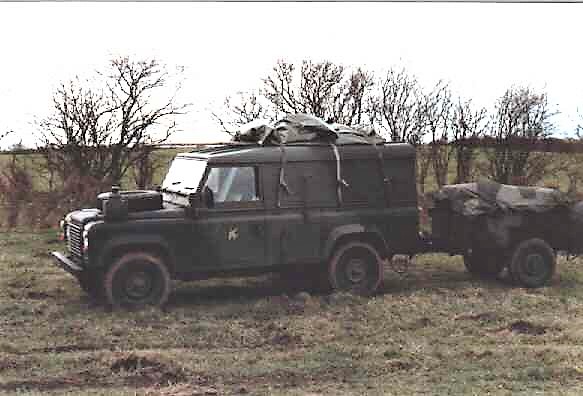
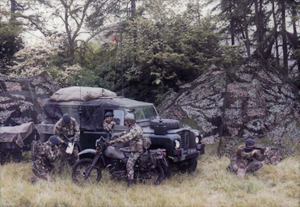
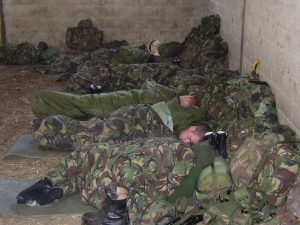
To provide rapid deployable operational support to OOA operations, TCW were and are equipped with specialist equipment that is unique to the unit. In addition, additional field training is given to all unit personnel, initially under Exercise BRUTUS, a unit generated exercise which taught personnel the required skills to work, operate and provide communications in the deployed environment. After which all successful participants gained the coveted X607 annotation. This training was preceded by Pre-Employment Training (PET), teaching personnel to deploy and operate Communications Information Systems in the field.
Several variations of PET followed over the years. During the Operational, training and recovery cycle (OTRC) format personnel would complete individual training courses, deploy on a COMMEX to build experience, this was followed by an SQN level ‘Mission rehearsal’ experience followed by an SQN level Mission Rehearsal Exercise (MRX) to assure the Wg Cdr of the Sqn’s deployment capabilities prior to the next revolution of the OTRC. The MRX is now known as Ex ROCK DOVE and is carried out by the remaining 2 FC Sqns.
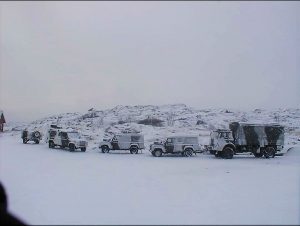
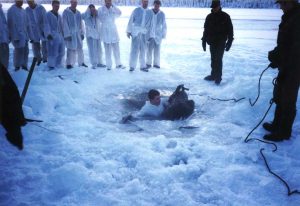
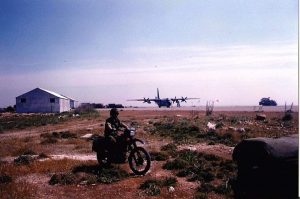
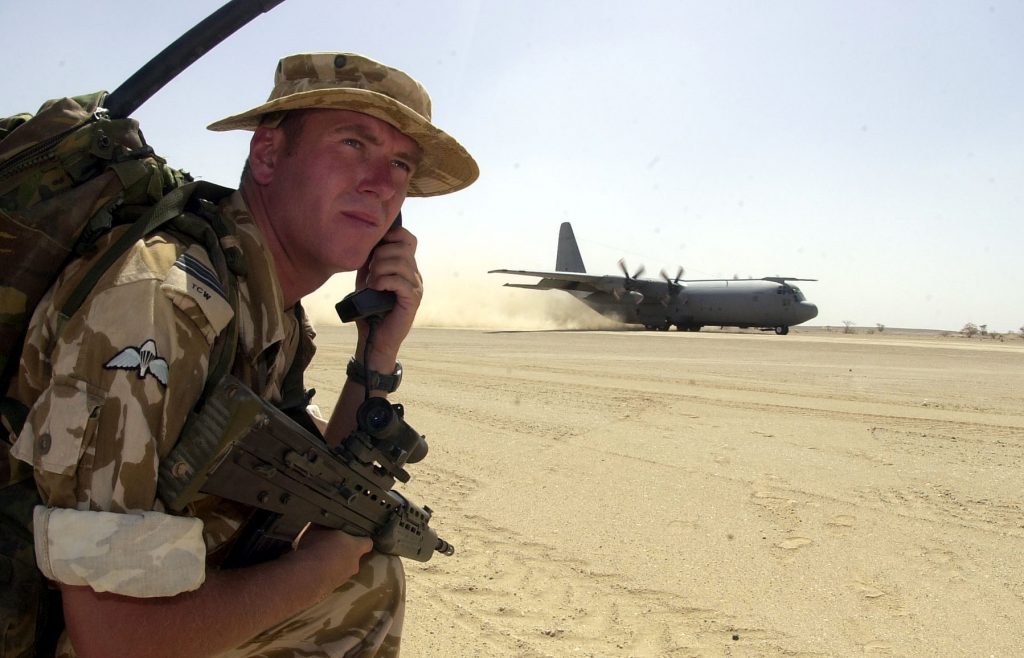
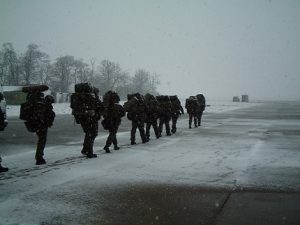
By the very nature of their prime role during the 1990’s and early 20’s, TCW were either training for deployed operations or engaged on them. The exercise programme included everything from three-man detachments to flight level exercises (40 plus personnel) up to full squadron deployments (100 plus). The aim of these exercises was to evaluate the Unit capability to support air operations and the Unit’s commitment to PJHQ and the Joint Rapid Reaction Force (JRRF). Correspondingly, TCW took part in, on average, five exercises per month during 1999. These ranged from small scale HF radio exercises Joint Communications Exercise (JoComEx) with the Royal Navy lasting one or two days to Exercises such as BRIGHT STAR which was conducted in Egypt and entailed a TCW deployment of seven weeks, or Deployments with the Royal Marines, Exercises WINTER DEPLOYMENT and STRONG RESOLVE lasting 3 months. Other major exercises that the Unit participated were, Exercise PURPLE WARRIOR, conducted in southwest Scotland in Sep – Nov, 1987 which looked test and evaluate lessons learned during the Falklands War, Exercise PURPLE STAR held in the USA, the largest airborne deployment since D-day and Arnhem, and SAIF SAREEA 1 and 2, a series of military exercises undertaken by the United Kingdom and Oman to evaluate the contingency and deployability of UK forces.
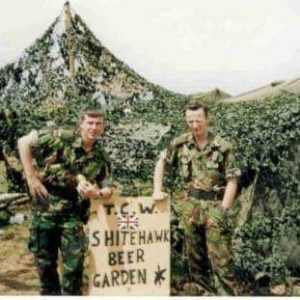
Operational deployments naturally followed a similar pattern, with the Unit supporting a significant number of operations throughout the year. A review of the personnel statistics during this time showed that the average time spent away in one year was 170 days, peaking to 286 in one case, with an average of 150 personnel deployed most months.
Despite this commitment, the Wing expanded in the support of operations. It also needed to maintain its own standards and thus practised in-house own procedures. It was predominately achieved by joint TCW/244 Tactical Communications Exercises (TacComEx) a series of internally generated and controlled exercises.
But Le Grand Cirque, was the annual communications exercise with TCW’s army counterparts 30 Sigs Regt titled Contingency Communication Exercise (ConComEx). Where, under Joint Theatre plans, the Wing was tasked to deploy and set up communications in any part of the World. Locations included the Caribbean, Bermuda, Turks and Cacaos, Zimbabwe and the Far East.